The Work Before the Work: Why Great Productions Are Won in the Planning Stage
There's a persistent romantic notion in creative circles that the best work happens in the moment — that inspiration strikes on set, that the magic is captured in the spontaneous exchange, that over-planning kills the organic energy that makes storytelling feel alive. And honestly, there's a kernel of truth buried in there somewhere.
But here's the part that often gets left out of that story: the spontaneous moments that actually make it into finished work almost always happened because someone put in serious hours before the cameras rolled or the mics went live. The space for genuine creative freedom has to be built. It doesn't just appear.
What Pre-Production Is Actually Buying You
Let's reframe how we think about preparation. Most people understand pre-production as a logistical exercise — securing locations, confirming schedules, arranging equipment, doing the administrative work that keeps a production from falling apart. And yes, it's all of that. But the more valuable function of thorough pre-production is cognitive.
When the fundamental questions about a project have been answered in advance — What are we trying to say? Who is this for? What does success look like? What's our contingency when things go sideways? — the people doing the creative work on the day of production have their mental bandwidth freed up for the things that actually matter. They can be present. They can listen. They can respond to what's happening in front of them rather than scrambling to solve problems that should have been solved a week ago.
In audio production specifically, this plays out in ways that are almost invisible to the final listener but completely determine the quality of what they hear. The difference between an interview that sounds intimate and revealing and one that sounds guarded and surface-level often comes down to whether the producer did the research to ask the right questions — and whether the subject was put at ease before the recording started. Neither of those things happens in the moment. They're built in advance.
The Counterintuitive Truth About Constraints
One of the more surprising lessons that emerges from working across different media over time is that creative constraints — real, well-considered ones — tend to produce better work than open-ended freedom. This runs counter to the intuition that more options equal more creative potential.
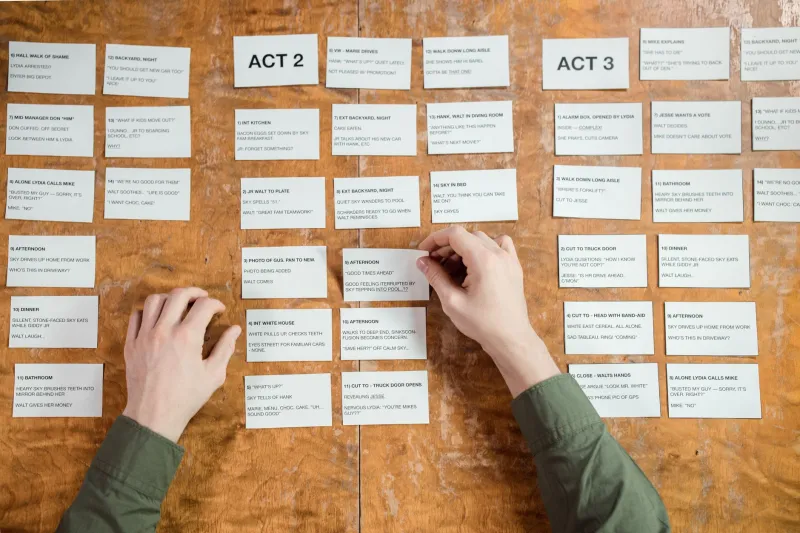
But think about it from a practical standpoint. Walk onto a set with no defined visual language, no agreed-upon approach to coverage, no shared understanding of the story's emotional arc, and what you get is a lot of improvisation that has to be sorted out in the edit bay. Walk onto the same set with a clear shot list, a locked structure, and a team that's been through the script together, and suddenly the room for genuine creative discovery — the happy accidents, the unexpected performance, the moment that wasn't in the plan but is clearly better than what was — expands dramatically.
Constraints create the container. The container is what makes the contents meaningful.
Research as a Creative Act
In documentary and narrative nonfiction work especially, research deserves to be recognized as a fully creative activity rather than a preliminary chore. The hours spent reading, interviewing sources, watching archival footage, or listening to existing recordings on a subject don't just inform the production — they shape the entire editorial sensibility of the final piece.
A producer or director who walks into a shoot knowing the subject deeply is a fundamentally different creative presence than one who's relying on surface-level prep. They hear things differently. They recognize significance in offhand comments that a less-prepared collaborator would let slide. They know when a subject is circling around something important and when to hold space rather than rush to the next question.
This kind of preparation can't be faked, and it doesn't show up anywhere in the credits. But it's often the single biggest determinant of whether a piece has genuine depth or just the appearance of it.
What Gets Skipped and Why It Costs You
The pressure to move fast is real, especially in independent media and podcast production where budgets are thin and timelines are compressed. Pre-production is almost always the first thing to get cut when a project is running behind or over budget. And in the short term, you can often get away with it — the production happens, something gets made, the deadline gets met.
But the costs show up in the edit. They show up as scenes that don't quite connect, as audio that has a technically clean signal but no emotional resonance, as visual sequences that cover the story's surface without ever getting underneath it. They show up as the persistent, nagging sense that the piece almost worked.
The edit bay is a powerful tool, but it can only work with what it's given. You can't cut your way into a story that wasn't captured. You can't mix your way into an interview that never found its footing. The raw material has to be there.
Building the Habit
For creators earlier in their careers, the discipline of thorough pre-production is one of the most valuable habits to develop — not because it makes you more professional in some abstract sense, but because it consistently produces better work. And better work, over time, is the only real career strategy.
That means building in the research time even when a project feels simple. It means having the pre-shoot conversation with a subject even when the schedule is tight. It means sitting with the editorial structure of a piece before you start gathering material, so you know what you're actually looking for.
The magic on set or in the studio is real. But it's made possible by the work that happened before anyone pressed record.