What You Don't Hear Is What Moves You Most: The Hidden Craft of Audio Storytelling
What You Don't Hear Is What Moves You Most: The Hidden Craft of Audio Storytelling
There's a moment in nearly every great film or television episode where something shifts in your chest. You can't quite name it. The image on screen might be simple — a character standing alone, a door closing, a landscape stretching out to the horizon. But something about it lands. Something reaches in and squeezes.
Nine times out of ten, that something is sound.
It's one of the most underappreciated truths in entertainment: the audio layer of any visual story is doing an enormous amount of heavy lifting, and most audiences never consciously register it. They feel it. They respond to it. But they rarely credit it. That invisibility isn't a flaw — it's actually the whole point. And understanding it changes the way you think about storytelling entirely.
The Craft Nobody Talks About at the Oscars
When people discuss what makes a movie or a TV show work, the conversation almost always circles back to the visuals. Cinematography, color grading, production design — these are the elements that get the lion's share of critical attention. Sound design, by contrast, tends to live in the footnotes. Even at major awards ceremonies, the audio categories get shuffled off to the less-televised portion of the evening.
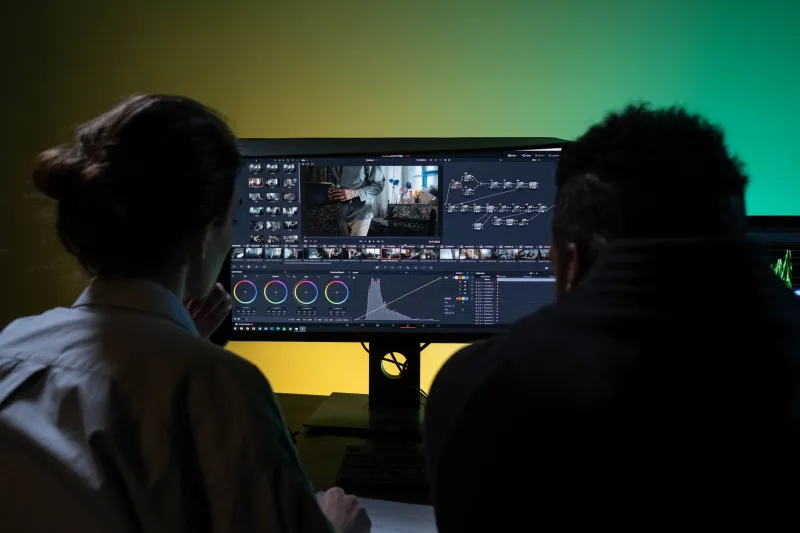
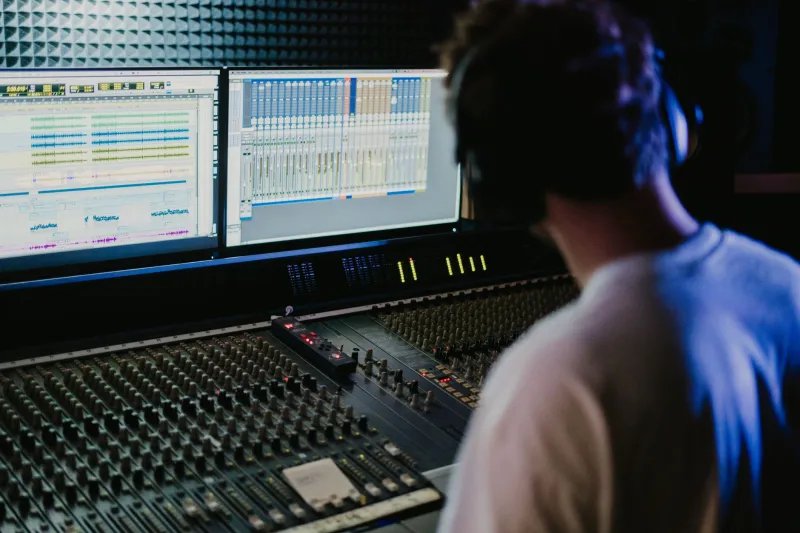
But spend any real time in a post-production environment — in an edit bay, in a mixing suite, working through the layers of a project with a seasoned sound designer — and the picture changes fast. You start to realize that every single emotional beat in a scene has an audio counterpart. Sometimes that counterpart is music. Sometimes it's ambient texture. Sometimes it's the deliberate absence of sound, which can hit harder than a full orchestral swell.
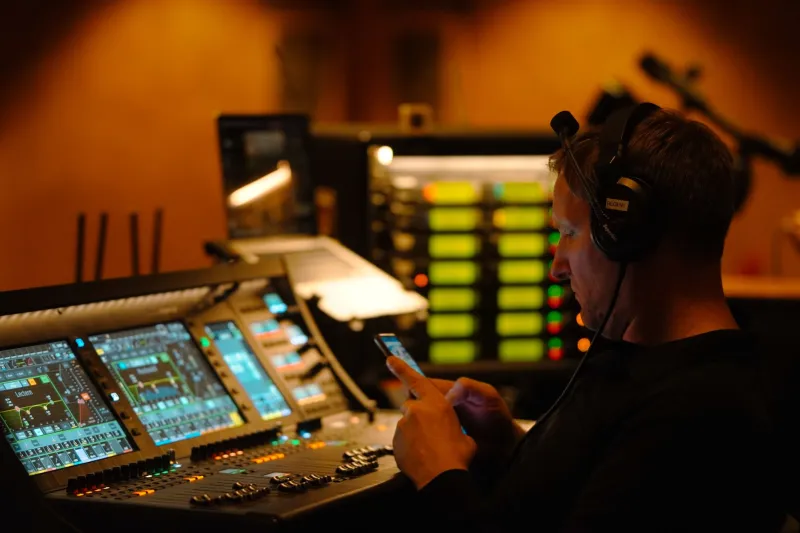
The craft here is genuinely technical. Sound designers work with a vocabulary that includes everything from room tone and foley to frequency manipulation and spatial audio. They're making decisions about where a sound sits in a mix — how close it feels, how much space it takes up, whether it bleeds into the next moment or cuts clean. These aren't decorative choices. They're narrative ones.
Why Audiences Feel What They Don't Notice
Human beings are wired to process audio emotionally before they process it intellectually. Low-frequency rumbles trigger a physiological stress response. High-pitched, irregular sounds spike alertness. Silence — real silence, the kind that's engineered into a mix — creates anticipation that can feel almost unbearable.
Filmmakers and sound designers have known this for decades, and the best ones exploit it with remarkable precision. Think about the way certain horror films use infrasound — frequencies too low for conscious hearing — to create a creeping sense of dread that audiences describe as "atmosphere." Or consider how a well-placed piece of ambient sound, the hum of fluorescent lights in a hospital corridor, the distant sound of traffic in a city scene, can make a fictional space feel utterly real.
This is why the audio layer of a story can be so difficult to critique objectively. When it's working, it disappears. The audience isn't thinking about the mix — they're living inside the story. The moment you start noticing the sound design consciously, there's a decent chance something has gone slightly wrong.
Platform Changes Everything
One dimension of audio storytelling that doesn't get nearly enough discussion is how dramatically the listening environment shapes the experience. A theatrical mix is built for a room with subwoofers and surround speakers. A streaming mix is being consumed on a laptop, a phone, a soundbar, or a pair of earbuds — often all four, by different viewers watching the same episode.
This creates real creative and technical challenges. A sound design choice that feels immersive and enveloping in a proper theater can become muddy and overwhelming through a phone speaker. Dialogue that's perfectly balanced in a controlled environment can get buried when someone's watching on a tablet with the volume cranked.
The best audio storytellers today are thinking about all of these contexts simultaneously. They're making decisions that need to hold up across wildly different playback scenarios, while still preserving the emotional intent of every scene. That's a genuinely difficult problem, and it requires a kind of creative flexibility that goes well beyond technical expertise.
The Edit and the Mix Are the Same Conversation
Something that becomes clear when you spend time working across different aspects of production is how deeply interconnected picture editing and sound design actually are. The two disciplines are often treated as sequential — you cut the picture, then you hand it off for sound. But that workflow can shortchange both.
The rhythm of an edit is fundamentally a sonic concept. The way a cut lands, the pace at which a scene breathes, the timing of a moment of silence before a line of dialogue — all of that lives at the intersection of visual and audio storytelling. Editors who think about sound while they're cutting, and sound designers who think about picture while they're mixing, tend to produce work that feels more cohesive and emotionally precise.
It's a reminder that the best storytelling is always collaborative at its core. No single element of a production exists in isolation. The sound informs the image, the image informs the sound, and together they create something that neither could achieve alone.
The Stories Worth Telling Deserve the Full Treatment
There's a tendency in lower-budget productions — and even in some higher-budget ones — to treat sound as an afterthought. Something to be addressed in post, to be fixed in the mix, to be "good enough" once everything else is locked. That approach almost always shows up on screen, even when audiences can't articulate why.
When a story matters enough to tell, it matters enough to give the audio dimension the same creative investment as every other element. The performances, the photography, the writing — none of it reaches its full potential without a sound design that's been thought through with the same intentionality.
The audiences who are moved by a story, who carry it with them after the credits roll, who recommend it to friends and come back to it years later — they're responding to the whole thing. Every layer. Including the one they never consciously heard.
That's the unspoken language of sound design. And learning to speak it fluently might be one of the most important skills in the storyteller's toolkit.