Where Stories Find Their Truth: Inside Scott Alan Ciolek's Approach to the Edit
Where Stories Find Their Truth: Inside Scott Alan Ciolek's Approach to the Edit
There's a moment every storyteller knows, whether they're cutting a film, assembling a podcast episode, or piecing together a long-form documentary. It's the moment when the material stops being what you thought it was and starts revealing what it actually is. For Scott Alan Ciolek, that moment almost always happens in the edit.
Post-production has a reputation problem. Ask most people outside the industry what editing is, and they'll describe it as the process of removing mistakes and stringing good takes together. That's a bit like describing cooking as the act of applying heat to food. Technically accurate. Completely misses the point.
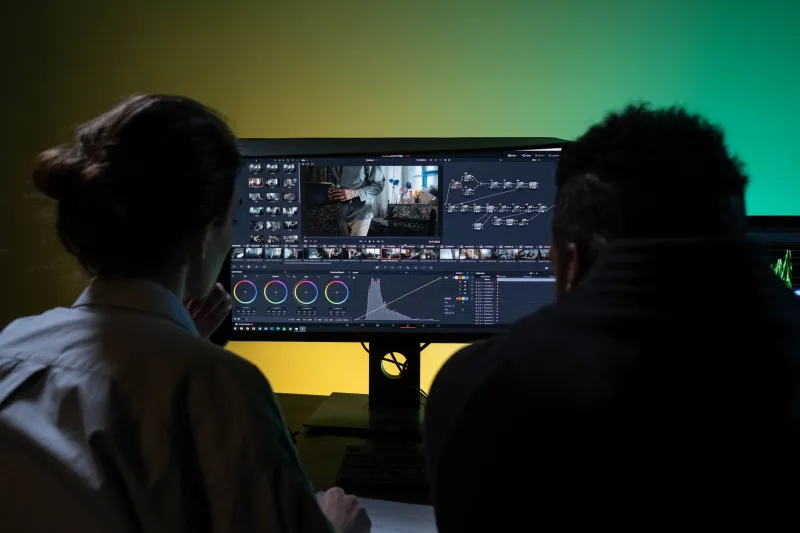
For Scott, the edit suite has always been less of a finishing room and more of a discovery zone—a place where assumptions get challenged, where scenes that felt essential on shoot day turn out to be dead weight, and where a throwaway moment captured almost accidentally becomes the emotional center of an entire piece.
The First Assembly Lie
Every editor—and every director who's spent real time at the timeline—knows the particular dread of watching a first assembly cut. It's almost always too long, awkwardly paced, and filled with moments that made perfect sense in the field but land with all the grace of a furniture delivery on a rainy Tuesday.
Scott talks about first assemblies not as rough drafts but as honest confessions. "The first cut tells you what you actually shot," he's noted, "not what you thought you were shooting." That distinction matters enormously. Scripts and outlines are built on intentions. First assemblies are built on reality. The gap between those two things is where the real editorial work lives.
Across his work in both audio and visual formats, Scott has consistently used that gap as a creative prompt rather than a problem to solve. When a scene doesn't work the way it was intended, the question he asks isn't how do I fix this but what is this actually trying to say? That reframe changes everything. Fixing implies restoring something to a predetermined state. Listening implies following the material somewhere new.
Pacing as Meaning
One of the more counterintuitive lessons that emerges from Scott's approach to editing is the idea that pacing isn't just a technical consideration—it's an argument. The rhythm at which information is delivered, the length of pauses between beats, the decision to cut away from a speaker before they've finished a thought versus letting silence breathe after a statement lands—all of it communicates something beyond the literal content of the words or images.
In audio work especially, this becomes almost musical. A podcast segment edited for efficiency and one edited for emotional weight can use the exact same recorded material and feel like completely different pieces. Scott has experimented with this across formats, sometimes cutting the same interview or scene multiple ways just to understand what each version is actually arguing. A tighter cut might feel authoritative and confident. A looser cut with more ambient room tone might feel intimate and vulnerable. Neither is objectively correct. Both are editorial choices that carry meaning.
This is the part of post-production that most audiences never consciously register, which is exactly why it's so powerful. Viewers and listeners experience the effects of editorial rhythm without knowing they're being guided. They just feel the story working—or notice, with vague discomfort, that it isn't.
When Footage Talks Back
Some of the most instructive editing experiences in Scott's career have come from projects where the raw material pushed back hard against the intended narrative. It happens more than most producers want to admit: you go into a shoot with a clear story in mind, and what you capture tells a different one.
The temptation in those situations is to force the original vision onto the footage—to cut around the inconvenient moments, to restructure sequences until they approximate what was planned. Scott's instinct runs the opposite direction. When the material resists, he takes that resistance seriously.
There's a version of editorial discipline that's really just stubbornness dressed up in professional language. And then there's the kind of editorial discipline that means being rigorous about what the story actually needs, even when that's uncomfortable. Scott has talked about specific projects where entire structural approaches were abandoned in the edit because the footage was pointing somewhere more interesting than the outline had anticipated. Those pivots are rarely easy. They're often the best decisions made on a project.
The Invisible Architecture of Emotional Resonance
Beyond pacing and structure, there's a layer of editorial decision-making that's even harder to articulate but arguably the most important: the management of emotional timing. Not just when something happens in a piece, but how long the audience is allowed to sit with it before the next thing arrives.
This is where editing becomes genuinely empathetic. To make good editorial decisions about emotional pacing, you have to accurately model what an audience is experiencing in real time—what they're feeling, what questions they're carrying, what they need next versus what they want next. Those two things are frequently in conflict, and navigating that conflict is a big part of what separates editing that's competent from editing that resonates.
Scott's multi-format background gives him an unusually wide reference library for this kind of work. The emotional grammar of a podcast is different from that of a short documentary. The rhythm of a radio segment operates differently than a produced video essay. Having worked seriously across those formats, he brings a kind of cross-disciplinary fluency to editorial decisions that purely single-medium practitioners sometimes lack.
The Edit as Authorship
There's a long-running debate in film theory about where authorship actually lives in a collaborative medium. Directors, writers, cinematographers, and editors have all had credible claims staked on their behalf at various points in that conversation.
For Scott, the debate itself is a bit beside the point. What matters is the practical reality: the edit is where authorship is exercised, regardless of where it technically originates. The choices made at the timeline—what to include, what to lose, where to cut, how long to hold—are not administrative decisions. They are the story. They are what the audience actually experiences.
That's not a diminishment of the work that happens before post-production. Great footage, strong performances, well-written scripts, and smart field production all matter enormously. But they matter as inputs. The edit is where those inputs become a story with a specific shape, a particular emotional arc, and a point of view that either earns its audience's trust or doesn't.
For Scott Alan Ciolek, walking into the edit suite isn't the end of the creative process. It's the part where the creative process gets honest.